
 1 year ago
215
1 year ago
215 China ‘Liujiang Man’ skeleton originally believed to be more than 200,000 years old was probably far younger
A skeleton that was once believed to belong to one of the earliest humans to live in China was likely far, far younger.
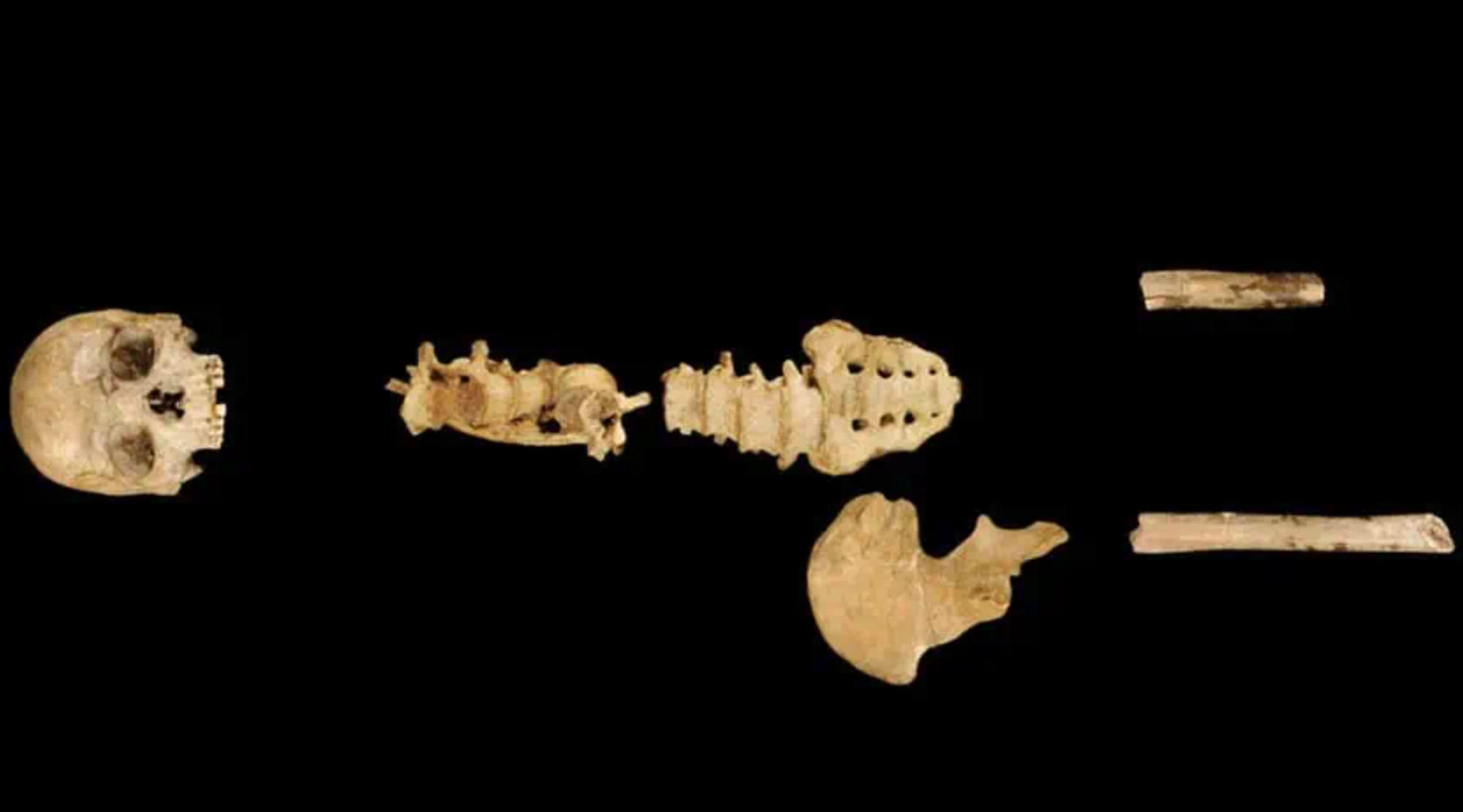
Archaeologists first discovered the skeleton in 1958 in the Liujiang district in Guangxi autonomous region in southern China, and some analysts believed it was upwards of 140,000 years old.
A new study published in the peer-reviewed journal Nature in late April reexamined the Liujiang skeleton and, through multiple strategies for dating fossils, determined that it was likely between 23,000 and 33,000 years old.
“If a human fossil lacks a reliable age, it is useless. While the new age is younger than the previously assumed age, it allows placing the Liujiang human at the correct position in the human family tree,” said Shao Qingfeng, a study co-author from the School of Geography at Nanjing Normal University.
“With this reliable age, the Liujiang skeleton is now important for understanding the relatively recent migration of Homo sapiens in the continent of Eurasia,” he told the Post.
If the fossil were indeed 140,000 years old, it would have made the Liujiang skeleton one of the earliest human fossils discovered outside of Africa, predating the earliest fossils found in Israel.
The new study places the Liujiang fossil in line with the theory that Homo sapiens migrated out of Africa in several waves starting around 300,000 years ago. A significant and permanent migration into Eurasia began over 100,000 years ago, and Homo sapiens then made their way to East Asia somewhere between 50,000 and 70,000 years ago.
That being said, there is no smoking gun to definitely prove how the first humans left Africa.
The new dating of the Liujiang fossil places the person as part of a massive dispersal event across Eurasia and into East Asia between 30,000 and 40,000 years ago.
No matter its age, the skeleton is far better preserved than other human remains discovered in Asia, a fact that helped cast doubt on the initial age estimation of 140,000 years old. The archaeologists unearthed a nearly complete cranium, large skeletal remains of the spine, and fossils of leg bones.
However, Shao said dating the skeleton proved difficult because it was discovered by accident, meaning nobody knew what sedimentary layer the bones were from.
“The dating was complicated by the poor preservation of the organic material in the fossils, which can be used for carbon-14 dating,” he said, adding that the warm and humid burial environment of southern China facilitated the decay of organic material.

Despite the difficulties of determining the age of “Liujiang Man”, scientists have studied the cranium over the years and have concluded that it exhibits evolutionary features more in line with Cro-Magnons, who settled in Western Asia and eventually migrated into Europe.
Shao said that compared with the older fossils like the ones found in Zhoukoudian Upper Cave in Beijing (dated to 36,300-39,000 years ago), the Liujiang fossils display a cranium that is more rounded and has a less developed brow ridge.
To further confirm this discrepancy, the scientists used three fossil dating techniques to age the skeleton: radiocarbon, which can date fossils younger than 60,000 years old; optically stimulated luminescence, which reveals how long nearby soil has been exposed to sunlight; and U-series dating, which analyses uranium instead of carbon.
Combining these three methods allowed the scientists to confidently proclaim the Liujiang skeleton was between 23,000 and 33,000 years old.
The study also decoupled human interactions with regional fauna found in China from the Late Pleistocene, which included Stegodons, an extinct relative to elephants, extinct giant tapirs, and also giant panda remains.
The mammal fossils were dated from between 97,000 and 227,000 years ago, older than when the Liujiang humans would have occupied the same area.






















 Bengali (Bangladesh) ·
  English (United States) ·