
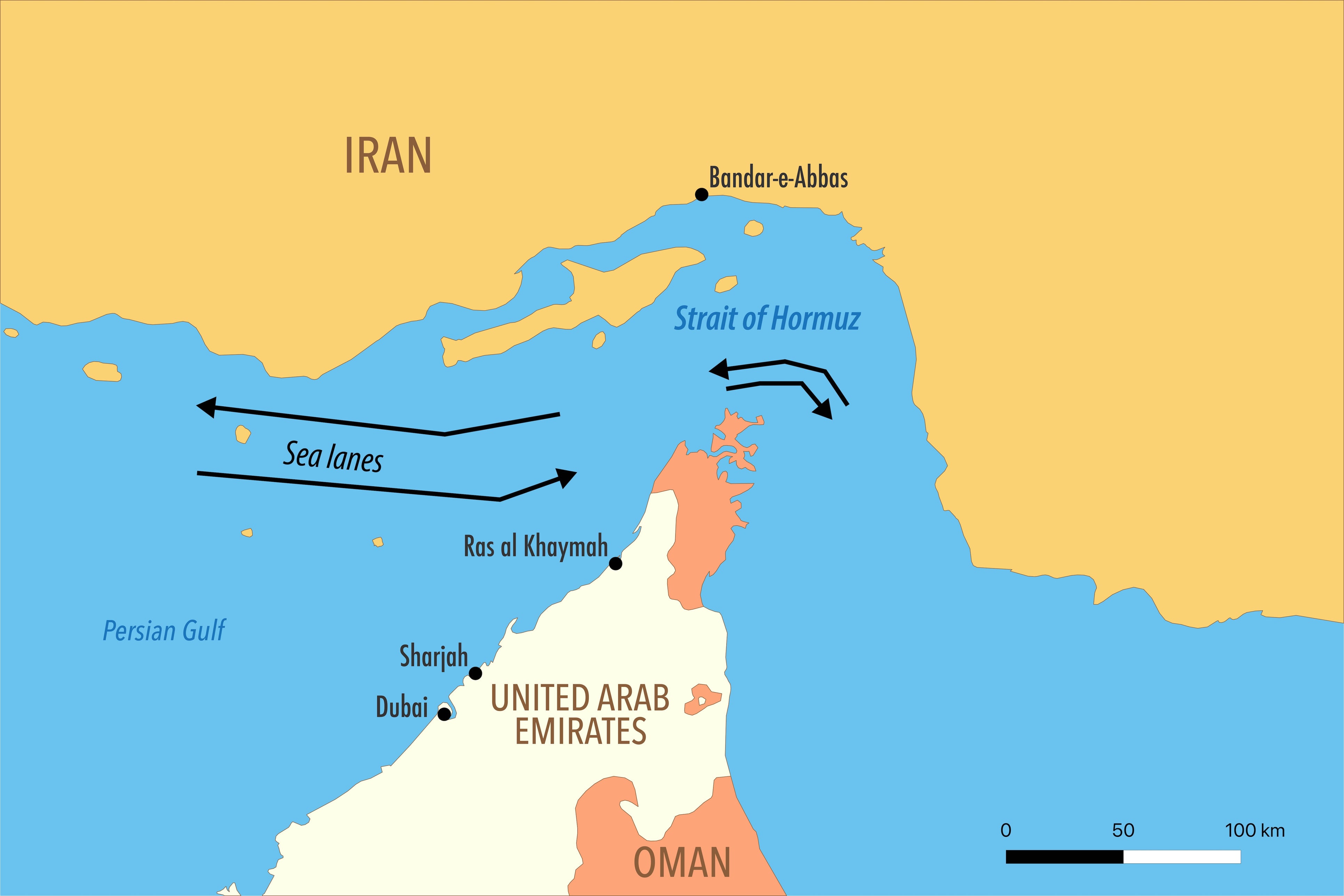
China has for the first time urged Iran to ensure the safe passage of vessels through the Strait of Hormuz amid fears of the months-long blockade hitting Beijing’s economy.
Chinese diplomat Wang Yi spoke to his Iranian counterpart Abbas Araqchi and urged him to restore normal navigation in the Strait of Hormuz, the Chinese foreign ministry said.
Mr Wang said while Iran’s sovereignty and security in the strait should be respected and safeguarded, freedom and safety of navigation must also be guaranteed. He added that the situation is at a critical stage of transformation and that a window for peace is opening.
“Working to resume normal passage of the strait is a unanimous call from the international community,” Mr Wang was quoted as saying.
He said China supported maintaining a ceasefire and continuing negotiations, which were in the interests of Iran, the region and the wider world.
China's appeal, for the first time since Tehran tightened control over the key global energy route that carries roughly 20 per cent of global oil trade, comes amid concerns over the blockade's long-term impact on its energy supplies and economy.
A US blockade of the strait has only exacerbated the crisis.
However, China has largely been able to shrug off the impacts of the Iran war with its economy accelerating in the first quarter of this year.
The economy expanded five per cent from a year earlier, according to data released on Thursday. The January-March data released by the government, which covers the period of the ongoing Iran war, which began on 28 February, was better than what economists expected and was up from the 4.5 per cent growth seen in the October-December quarter.
On a quarter-on-quarter basis, China's economy grew 1.3 per cent in the first three months from the final quarter of last year, the fastest pace in a year.
It also marks the first release of official GDP data since Beijing lowered its annual growth target last month to 4.5–5 per cent, the weakest expansion goal set by the government since 1991.
Economists expect China, the world's second-largest economy, to be able to weather short-term impacts from the Iran war, now in its seventh week.
The war is pushing energy prices higher, worsening inflation and impacting global economic growth. But longer term, areas including global demand for Chinese exports could take a hit, which are already facing US president Donald Trump's 10 per cent tariffs.
"The lack of a speedy resolution to the Iran war is likely to dent global growth, which will negatively impact other economies' ability to absorb Chinese exports," said Eswar Prasad, a professor of economics and trade policy at Cornell University.
"At a time when all countries are trying to protect their firms, households and economies from the fallout of the Iran war, the appetite for Chinese imports is clearly shrinking," he explained.
Under Xi Jinping, China has sought to reshape its economic model as it grapples with a range of structural challenges, including weak domestic consumption, a shrinking population and a prolonged property crisis.
Also on Thursday, government data showed industrial output in China rose 5.7 per cent in March year-on-year, better than market expectations, as global demand for Chinese exports of electronic equipment, autos, semiconductors and robotics remained strong.
Retail sales were up 1.7 per cent from a year earlier, worse-than-estimates and slower than the 2.8 per cent growth in January and February, reflecting sluggish domestic demand for consumer goods.
A years-long real estate sector slump in China has dragged consumer and investor confidence, but the country managed to achieve its targeted "around 5 per cent" growth last year, powered by robust exports that drove its trade surplus to a record nearly $1.2 trillion despite US tariffs.
China's exports will continue to be key in propelling its economy this year, economists believe, but reliance on export growth could now increasingly become a problem.

















 Bengali (Bangladesh) ·
  English (United States) ·