
 1 year ago
400
1 year ago
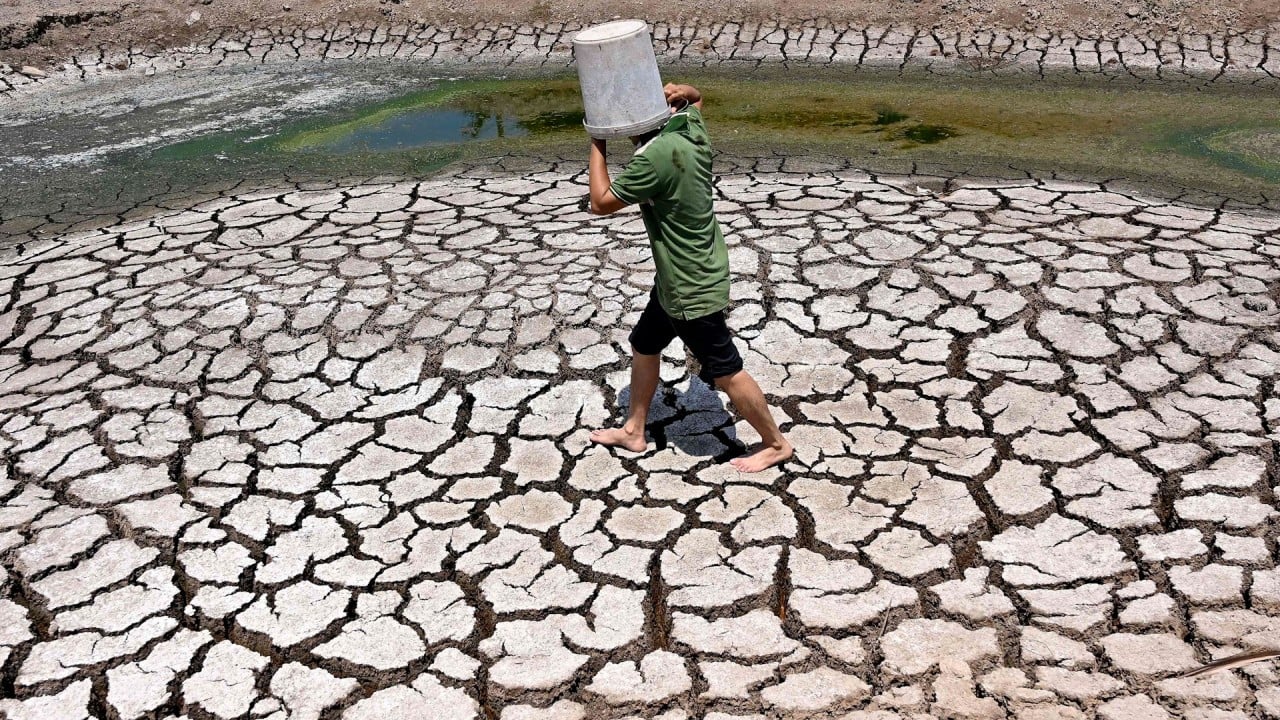
400 China is facing higher than average temperatures this summer as forecasters warn that preparations are needed to combat the threat of droughts and power shortages.
Some regions may see extreme high temperatures, but the overall situation is expected to be less severe than in 2022 when the country suffered its worst heatwave on record with abnormally high temperatures lasting over 70 days.
“Temperatures in most parts of the country are expected to be higher than the average for the same period in previous years, with an increased number of hot days,” Zheng Zhihai, chief forecaster of the National Climate Centre, told China News Service, a state-run news agency, earlier this week.
The persistent searing weather and droughts in the Yangtze River basin during the summer two years ago was abnormal due to multiple factors, Zheng was quoted as saying.
He added that there was only a small possibility of similar extreme temperatures over a long period this year.
04:31
Southeast Asia roasts as nations suffer under expected record-breaking heatwave
Southeast Asia roasts as nations suffer under expected record-breaking heatwave
However, he said there was still a need for preparatory work and proper irrigation to prevent droughts and to make sure electricity would continue to be supplied during the peak summer season when demand for air conditioning is at its height.
The China Meteorological Data Service Centre classes any day where the maximum temperature passes 35 degrees Celsius (95 Fahrenheit) as a “high temperature day” and after three straight days it will officially become a heatwave.
Scientists have warned of high risks of more extreme heatwaves, heavy rainfall and droughts, accelerating sea level rises and fast melting of sea ice and glaciers, as a result of global warming which is worsened by human activities.
Over the past month large areas of South and Southeast Asia have been suffering from a prolonged heatwave. In India, where the capital New Delhi and nearby Rajasthan state have seen temperatures above 50 degrees Celsius (122 Fahrenheit), more than 50 people have died from heatstroke in the past week alone and electricity supplies have come under heavy pressure.
Neighbouring Pakistan has also recorded temperatures above 50 degrees Celsius and other countries affected include Thailand, where the severe hit has affected farmers, including durian growers – a fruit known for its pungency that is popular in China.

The World Meteorological Organisation (WMO) has warned that this year is likely to be hotter than last year.
The warning was part of a report released on Wednesday that the global temperature is likely to rise by 1.5 degrees Celsius above pre-industrial levels by 2028, at least temporarily, missing a target set in the Paris Agreement in 2015.
As well as the Chinese mainland, Hong Kong is also expected to see higher temperatures than normal this summer.
“Hong Kong is expected to experience some cooling from La Niña, but this will be overshadowed by the overall global warming trend,” Hong Kong Meteorological Society spokesman Leung Wing-mo said.
The WMO has said that El Niño, which brings unusually warm waters to the Pacific, is waning and transitioning to the opposite phenomenon, La Niña. This will mean a large-scale cooling of the ocean surface temperatures in the central and eastern equatorial Pacific later this year, bringing cooler weather and increased rainfall to coastal regions.
“El Niño is transitioning to an ENSO-neutral state, and then La Niña is expected to develop, so La Niña’s effects may not be very significant now,” he said.
An ENSO neutral state, which is short for El Niño-Southern Oscillation, refers to normal conditions when there is no strong El Niño or La Niña event.

01:41
China braces for record heatwave as temperatures soar in Beijing and Shanghai
China braces for record heatwave as temperatures soar in Beijing and Shanghai
Ren Guoyu, a professor with China University of Geosciences, said that in late May and early June, South Asia experiences subtropical highs, which results in fewer clouds and less rain, causing the temperature to rise.
This year’s subtropical high covering an area from Iran to South Asia was particularly robust, Ren, who is also a researcher at the National Climate Centre, told China News Service.





















 Bengali (Bangladesh) ·
  English (United States) ·