
 1 year ago
263
1 year ago
263 Hong Kong residents doubt new effort to encourage recycling will have much effect, with some saying they never heard of it
Some Hong Kong residents have expressed doubts that a new government programme to promote recycling will motivate more people to adopt the practice, with many saying they had no knowledge of the new campaign.
The Environmental Protection Department on Friday announced that residents who dropped off designated recyclables at the government’s Green@Community recycling locations would receive six times the normal amount of points under its “Green$” programme.
The campaign, which runs from Saturday until July 31, comes on the heels of the government’s decision last week to suspend a controversial waste-charging scheme that was to roll out citywide in August after two decades of debate and deliberation.
The Post visited a Green@Community recycling facility in Tin Hau on Saturday and observed nearly three dozen people dropping off items over the span of about 30 minutes.
Those who spoke to the Post said recycling was part of their regular routine and they only learned about the new campaign when they arrived at the facility.
“I had no idea about these credits,” said Carina Nelson, who was dropping off plastic, glass and some waste paper.
The 59-year-old textile consultant said she brought her waste to recycling stations about twice a week, but added she had never used the Green$ programme and was not interested in the promotion.
“To me it’s part of your citizen’s duty to recycle, whether there is an incentive or not,” she said.
The Green$ Electronic Participation Incentive Scheme was launched in 2020 and awards residents 10 points for each kilogram of recyclables they drop off at designated sites. Points can be redeemed for small items such as noodles, rice, cooking oil and towels.
Housewife Raphaela Leung, 52, said that for people who already recycled, collecting points would not serve as much of an incentive as the environmentally friendly practice was already part of their regular routine.
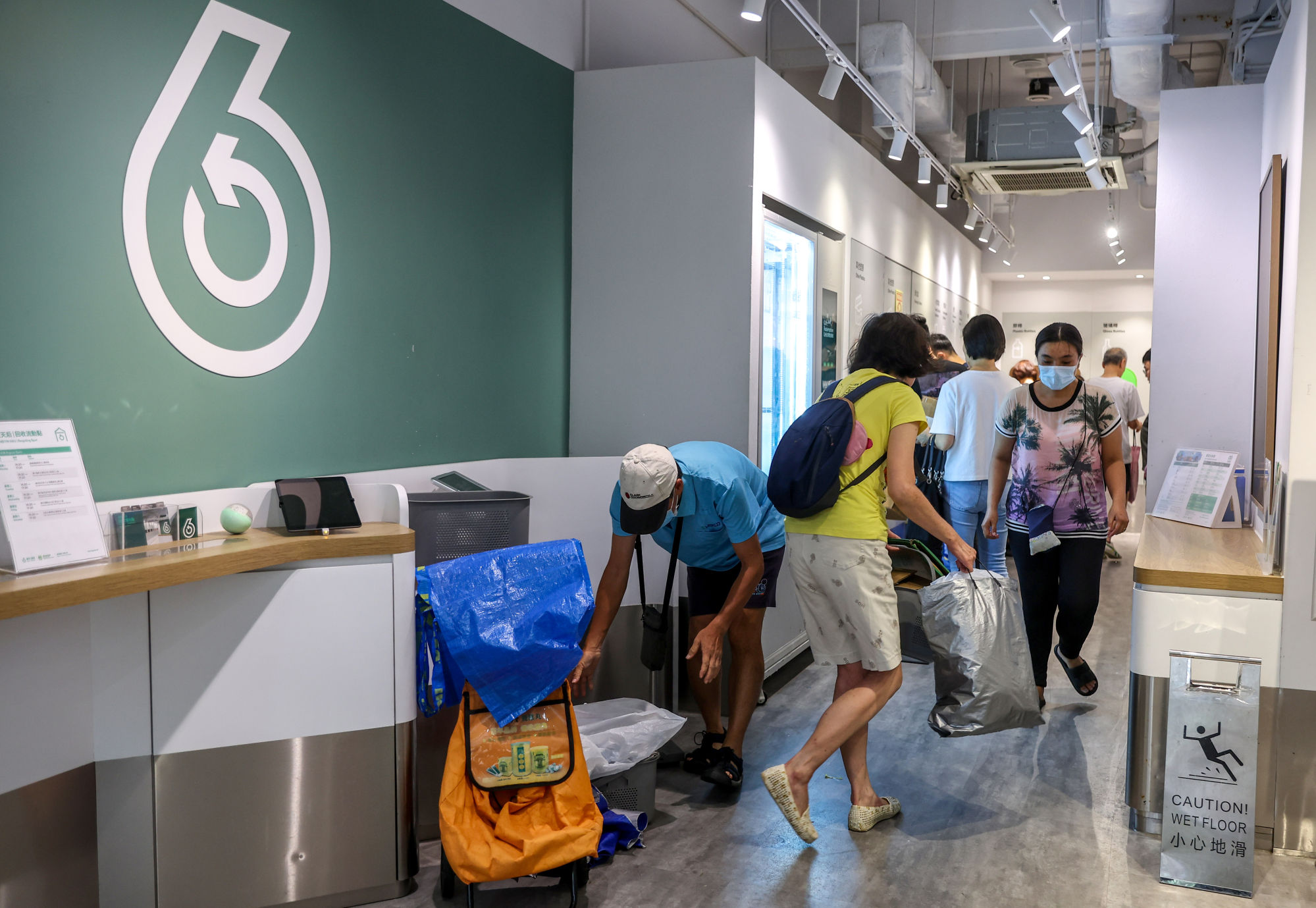
She also doubted the programme would encourage other residents to adopt the habit, noting that people from low-income households in particular did not recycle often as their flats were small and limited the amount of materials they could store until they had time to drop them off at a facility.
To convince more people to take up the practice, the government should build additional fixed recycling stations rather than simply collect materials from them on a weekly basis in most districts.
“It’s impossible for people to recycle if it’s a weekly thing,” she said. “They need to add more recycling [facilities].”
As part of efforts to compensate for the loss of waste charging, the government has pledged to double the number of food waste recycling facilities and add 100 mobile collection spots across the city within a year to help residents prepare for when the scheme does eventually launch, without giving further details on the timetable.
According to the department, the city had 11 recycling stations, 77 recycling stores and more than 130 recycling spots as of May, and that the number of public collection points would rise to about 500 by August.
But most of the residents who spoke to the Post said they wished the government had pushed ahead with waste charging in conjunction with other improvements in recycling.
Roger Wu, a 55-year-old worker in the architectural industry who recycled every few days, said that in a city as “convenient and efficient” as Hong Kong, anything that was inconveniencing would encounter resistance.
Nonetheless, he felt residents had a responsibility to adopt more environmentally friendly actions.
“It’s like a carrot and stick, and the carrot is our next generation,” he said.
To prepare for waste charging, the government produced 170 million designated bags, at a cost of about HK$74 million (US$9.5 million).
The department began handing out the bags for free to all 214 public rental housing estates in Hong Kong on Saturday. Each of the households would receive 20 of the bags each month.
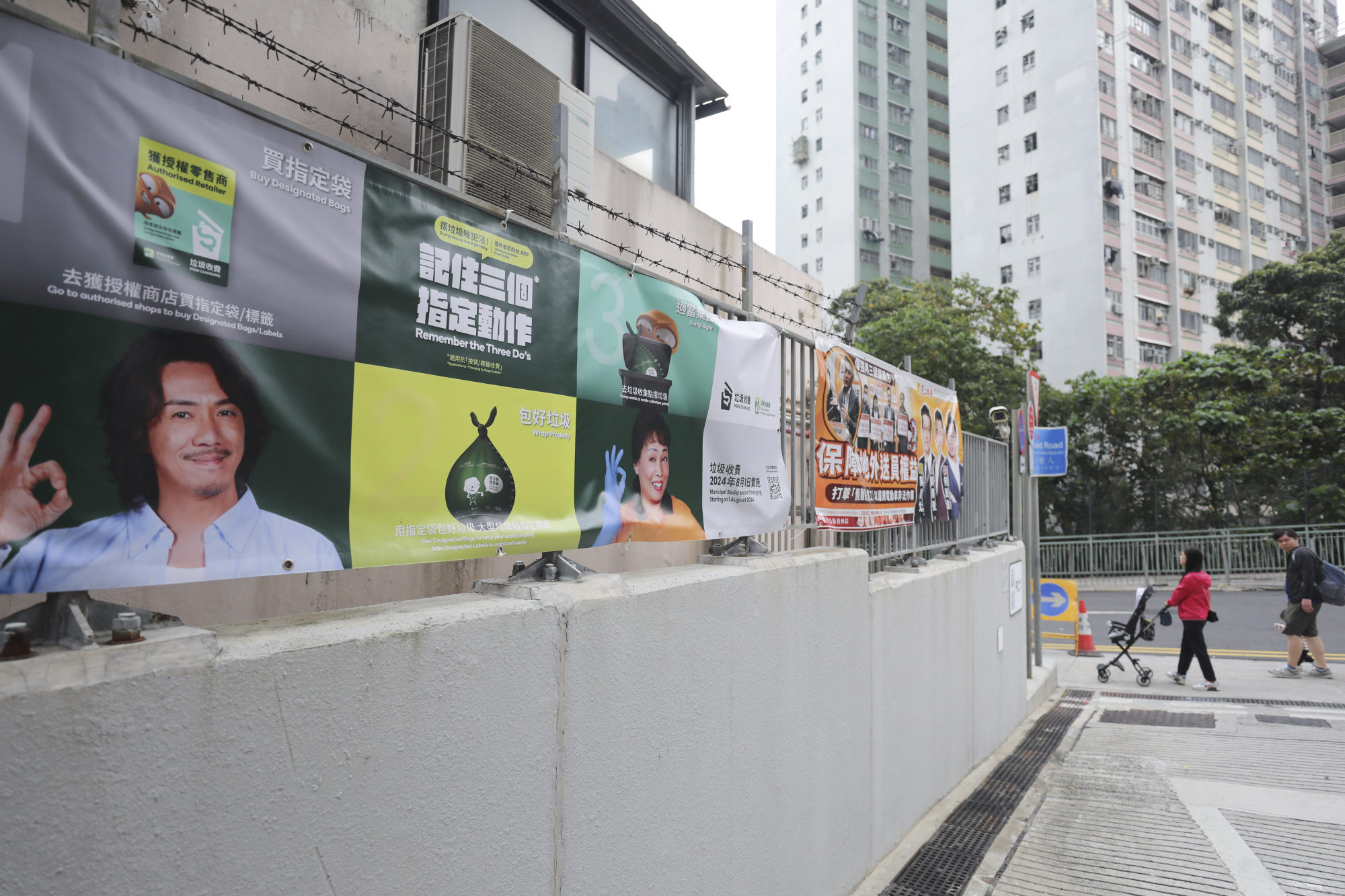
The distribution of the bags was part of a plan to educate residents about waste reduction and separation for recycling, it said.
Peter Lee, a 73-year-old retiree at Healthy Village in North Point, said he was glad the bags were being given away, but he had not heard anything about the plan or where to get them.
“I have no idea what to do,” Lee said. “I have not seen anyone here today.”
Law Hoi-ying, 17, and her mother, Bak Pui-sum, 50, who also live at Healthy Village, said the hand out of bag meant little to them.
The estate’s management had previously distributed garbage bags for free to all residents and her family regularly recycled.
“It sounds useless,” Law said. “Since the Hong Kong economy is so bad, it would be better to implement policies to help poor people.”
















 Bengali (Bangladesh) ·
  English (United States) ·