
 1 year ago
423
1 year ago
423 Jemaah Islamiah’s disbandment in Indonesia rings hollow for Bali bombing families
The surprise announcement by the militant group Jemaah Islamiah to disband itself has been met with scepticism by families and friends who lost loved ones in the 2002 Bali bombings, Indonesia’s worst ever terror attack.
Last month, 16 senior JI members announced the dissolution of the group behind the bombings in the Indonesian city of Bogor.
Abu Rusdyan, who was widely believed to be JI’s leader, said the group has pledged its allegiance to Indonesia. JI will also revamp the hardline Islamist curriculum of its affiliated schools, which number about 100 in the country, by aligning it with the national syllabus, according to the announcement.
To Melbourne-based Jan Laczynski, who lost five of his friends in one of the bombings, JI’s announcement was scant consolation.
“Sadly, the damage that JI has done can never be truly disbanded for all those families and friends of their terror attacks … the pain and anguish remain forever,” Laczynski, who works in the aviation sector, told This Week in Asia.
On the night of October 12, 2002, Laczynski left Bali to return to Australia. Not long after he reached Melbourne, he found out that his Indonesian friends – Wayan Tamba, Rudy Armansyah, Ketut Sumarawat, Made Mertana and Kadek Sukerna – who worked at the Sari Club in the Kuta tourist district were killed when a one-tonne bomb was detonated outside the club.
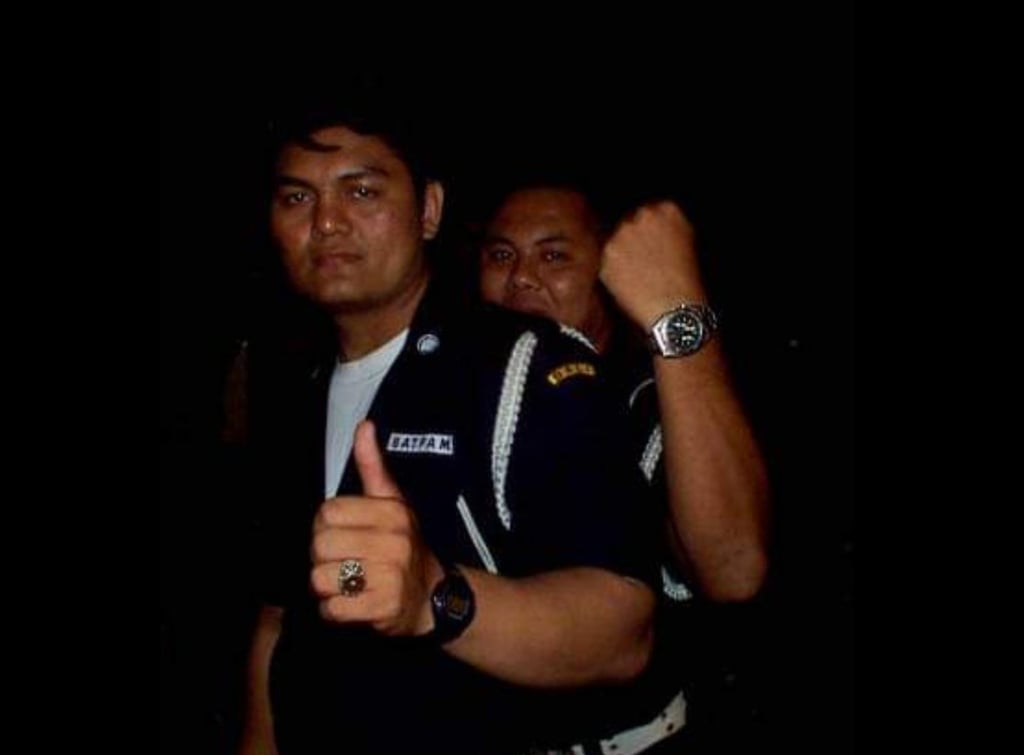
A second bomb was set off at the neighbouring Paddy’s Pub while a smaller device exploded outside the US consulate in Renon Square.
A total of 204 people including two bombers died in the attacks, with another 209 injured.
JI’s decision to disband may have been prompted by its aim to protect its affiliated schools from closure, according to a report by the Institute for Policy Analysis of Conflict released on July 4.
“If they continued as before, not only would more and more members be arrested, but in all likelihood, their schools and other assets would be seized,” the report said.
“For the moment, then, the likely result is the flourishing of JI-affiliated schools and the increasing involvement in public life of the men who signed the June 30 statement. What happens to the rest of the membership remains to be seen.”
Indonesian housewife Chusnul Khotimah, who was one of those injured by the blast in Kuta, told This Week in Asia that she was “so grateful” to hear that JI has disbanded.

Khotimah was 33 years old during the bombings and lived in a house behind Paddy’s Pub with her husband. She was buying food from a roadside stall close to the Sari Club just before the attack happened.
“I didn’t hear the blast because I must have been knocked unconscious immediately,” she said.
“When I woke up, I was on the ground and my skin was peeling off … I saw foreigners running out of the club screaming and shouting ‘Help me, help me’.”
Khotimah was taken to a local hospital and then flown to Perth, where she received 37 skin grafts, having suffered burns to 70 per cent of her body.
“I half believe JI when they say they have disbanded, and half don’t believe them. I worry about their children and younger generations who have seen their parents punished and want revenge.”
Khotimah said she hoped the Indonesian government would continue to monitor former JI members to ensure that they were no longer involved in militant activities.
Apart from the Bali attack, JI was involved in the 2000 Christmas Eve church bombings across eight cities in Indonesia, the 2003 Marriott hotel bombing in Jakarta and the 2009 Jakarta bombings that targeted the same hotel and Ritz-Carlton hotel. The group was officially banned in Indonesia in 2008.

Three JI members accused of masterminding the Bali attacks – Imam Samudra, Ali Ghufron and Amrozi Nurhasyim – were executed in 2008.
Ghufron and Amrozi’s brother, Ali Imron, who drove the van to the front of the Sari Club with a suicide bomber before fleeing the scene on a motorbike, received a life sentence for his role in the attack.
Over the years, most senior JI figures were either jailed, killed in police raids, or executed in Indonesia.
Arif Budi Setyawan, a former JI member who has since become an activist in deradicalisation, told This Week in Asia that more time was needed to assess if JI’s statement was genuine.
“In my opinion, JI has disbanded organisationally but it still needs long-term guidance and control. Their commitment [to disband] still needs to be proven,” Setyawan said, adding that ex-JI members must be closely scrutinised to ensure they were no longer radicalised.
“JI members need continued government guidance to strengthen their commitment and guarantee that the dissolution of JI is not just a manoeuvre by the group.”

The last JI attack in Indonesia happened in 2009, indicating that the group had long abandoned its violent aspirations, Setyawan added.
But for Australian Sandra Thompson, whose 29-year-old son Clint died in the Bali attack, the retiree said she did not believe JI’s statement.
“Whilst there are Muslims who would never hurt others, radical Muslims are still out there brainwashing young men. If they would [disband], the world would be a safer place.”




















 Bengali (Bangladesh) ·
  English (United States) ·