
 1 year ago
218
1 year ago
218 Why China’s latest corruption probes hint at fury, betrayal over political disloyalty
An unusual decision by Beijing to announce corruption probes into two former defence ministers on the same day has underscored the fury and frustration of the Communist Party’s leadership over persistent graft that is deemed a threat to China’s fighting capacity and nuclear deterrence, analysts said.
In an unprecedented move, the party’s 24-person Politburo decided to launch corruption investigations into Wei Fenghe and his successor Li Shangfu, and expelled both from the party, according to statements about the decision released by state news agency Xinhua on Thursday.
The two men will face criminal charges from military prosecutors too.
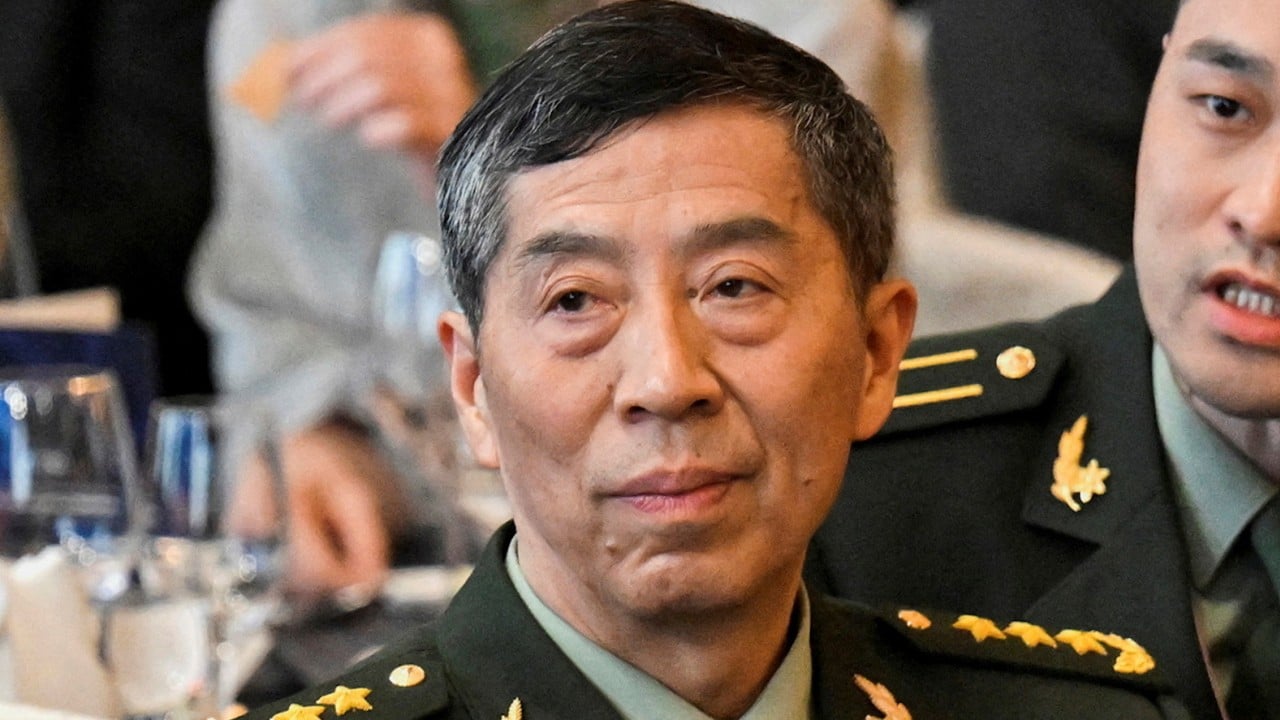
Li was sacked from his job in October, just seven months after he became defence minister. Wei held the position from 2018 to 2023.
Observers drew attention to the especially harsh wording in the brief statements of the accusations against the two men.
The statements said they “betrayed the trust of the party and the CMC [Central Military Commission], seriously polluted the political environment of the military, and caused great damage to the party’s cause, national defence and military construction, as well as the image of its senior leaders”.
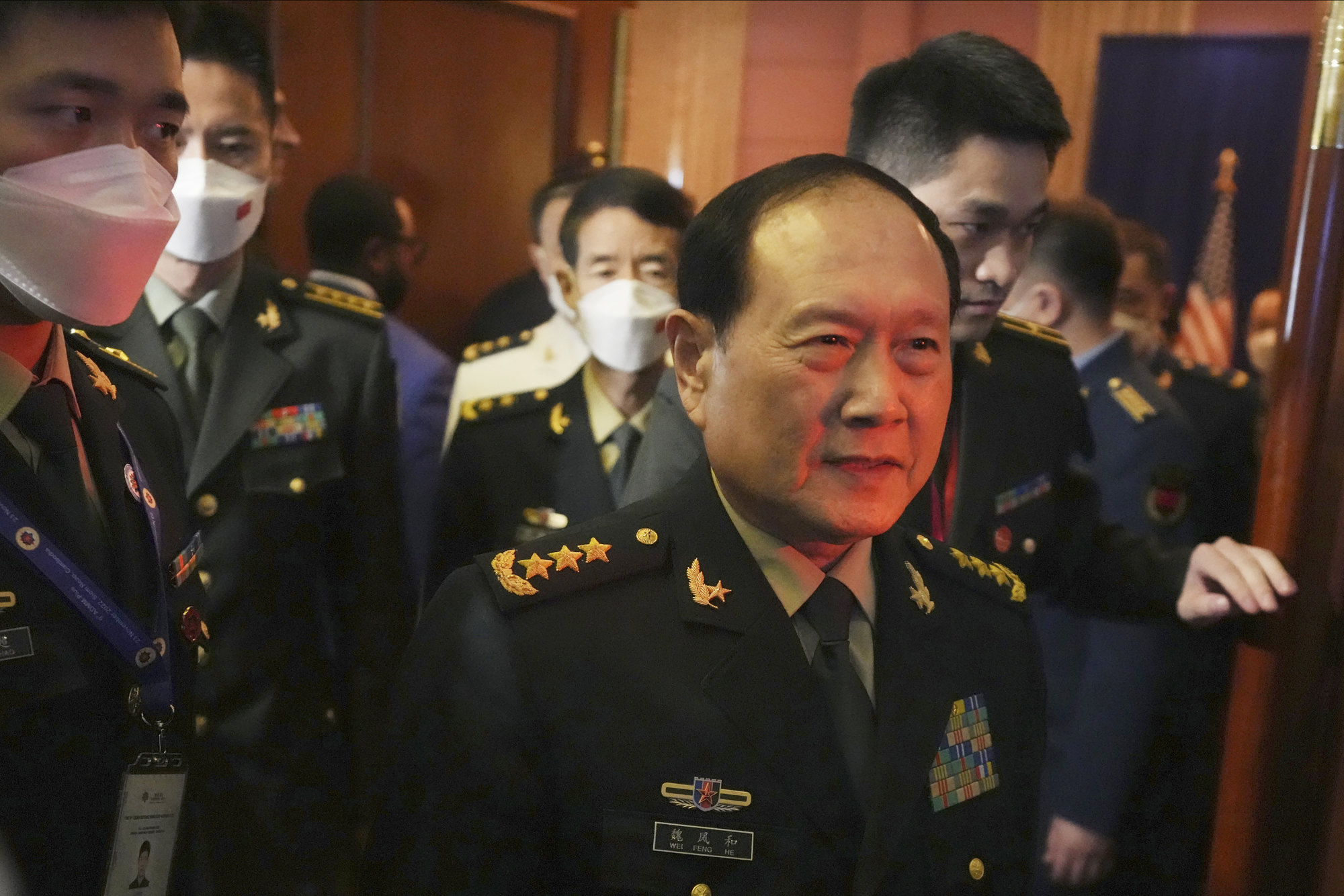
The wording is much harsher than the accusations against Xu Caihou and Guo Boxiong, two former vice-chairmen of the CMC – China’s top military command body – who were sacked for corruption during the first term of President Xi Jinping, according to a political scientist from Nanjing university, who asked not to be named due to sensitivity of the matter.
“You can sense the party’s anger and fury in the accusations on Wei and Li,” he said, adding that it would be particularly concerning to party leaders if control over China’s nuclear arsenal was called into question.
“You can almost tell there is a feeling of ‘how dare you let me down on the most important job!’”
Wei held a number of senior posts over two decades relating to the PLA’s nuclear arsenal. He also became the first chief of the rocket force when it was formed in 2015 as part of a major military overhaul.
Li Shangfu, Wei’s successor, served for decades in the military’s equipment sector, which has also been the target of extensive corruption investigations in the past year.
Thursday’s statements singled Wei out for degrading the “political ecosystem” of the People’s Liberation Army (PLA), and Li for contaminating the PLA’s military equipment industry.
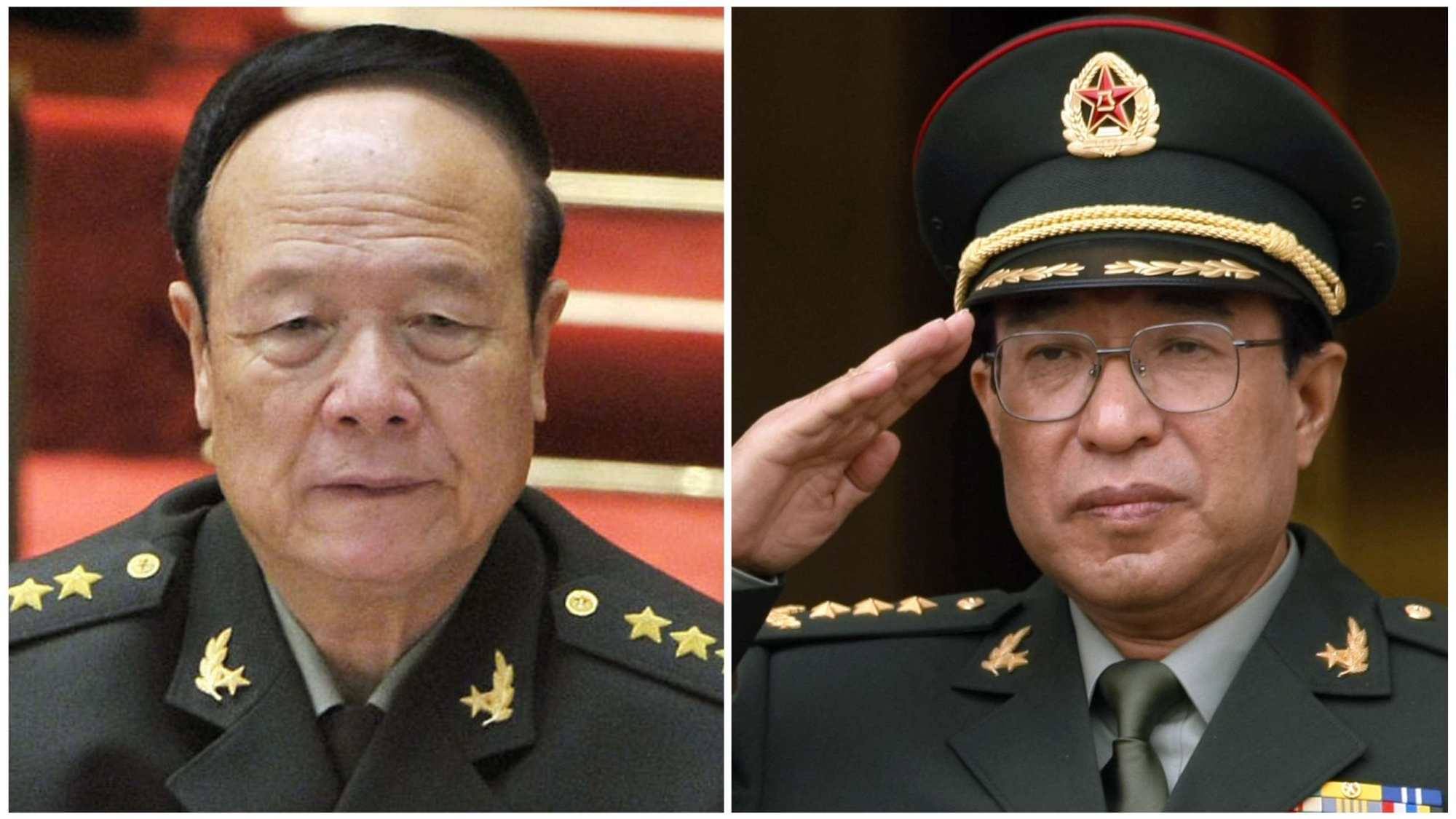
The analyst added that Beijing’s frustration may have been compounded because unlike Guo and Xu, both Wei and Li were promoted to their most senior position under Xi.
He noted that beside the usual short description of the alleged corruption, the Xinhua announcement underlined Wei and Li’s political disloyalty.
The military has become a prime target for Xi’s anti-graft campaign, and Beijing has said proudly that more Chinese generals have been sacked for corruption under Xi than were killed in decades of war in the 20th century.
Xi has been lauded for the anti-graft campaign by Chinese military leaders for having “saved the party and saved the military”.
The Chinese leader has long stressed that a strong military must be “clean and loyal”, a point he repeated in a key meeting last week as he urged Chinese generals to eliminate “conditions that breed corruption”.
As severe as the wording was on Thursday, it also raised new questions. The official announcements said that while Wei Fenghe was accused of taking bribes, his successor Li Shangfu was accused of both taking and giving bribes. It did not offer details on when Li’s bribes happened or whom he sought to bribe.
“It would be interesting to ask to whom did Li, who was already a top brass in the military, give money to,” the Nanjing-based analyst said.
While some observers have argued that corruption in the PLA has exposed weaknesses in its military abilities, some have argued it could actually improve the force’s capacity to fight.
Periodic corruption probes in the Chinese military system should not be mistaken as a sign of weakness in Xi’s role as the CMC chairman, said James Char, a research fellow with the S. Rajaratnam School of International Studies at the Nanyang Technological University in Singapore.
“Xi Jinping’s control over the PLA is stronger than that of any of his predecessors, even Mao Zedong, if we look at the reforms he has been able to effect throughout the PLA since late 2015,” Char said.
Lu Li-shih, a former instructor at the Taiwan Naval Academy in Kaohsiung, said the anti-corruption drive might have a positive impact on the PLA’s fighting capability.
“Look at the cases of Guo Boxiong and Xu Caihou. Did they affect [Xi’s] military reform? No, the [PLA’s] combat effectiveness has improved,” Lu said.
He added that hunting down “tigers”, a term used by the party’s disciplinary body to describe corrupt senior officials, would give more hope to the honest and capable junior officials and better prospects of promotion.
01:54
China sacks defence minister Li Shangfu with no explanation after nearly two-month absence
China sacks defence minister Li Shangfu with no explanation after nearly two-month absence
Hong Kong military commentator Liang Guoliang said the latest corruption case would not have much impact on the PLA’s modernisation efforts, especially in terms of its equipment, but it showed the urgency to improve military reform in the rocket force with better checks and balances, to restore confidence on China’s nuclear deterrence.
“The PLA’s modernisation, especially regarding equipment, is a very comprehensive process under Xi’s direct watch. They need to present periodic plans to Xi and the Politburo for approval so that the CMC’s equipment department can coordinate with thousands of Chinese research institutes and arms manufacturers to deliver the new equipment,” Liang said.
“A handful of corrupt military officials might have taken some money in the process, but I think it is very hard to rig the whole system under top leadership’s direct watch,” he added.
Liang said further reform was needed in China’s military structure to prevent such corruption from breeding again.
Additional reporting by Amber Wang
















 Bengali (Bangladesh) ·
  English (United States) ·